
7 Things Your Prayer Dress Must Have Before You Buy It
A prayer dress can look perfect in a product photo and still fail the moment you bow, kneel, and lower your head to the ground. Salah asks a lot of a garment: it has to cover fully, stay in place through every movement, and feel comfortable enough that you stop thinking about it. Before you add one to your cart, run it through these seven checks.
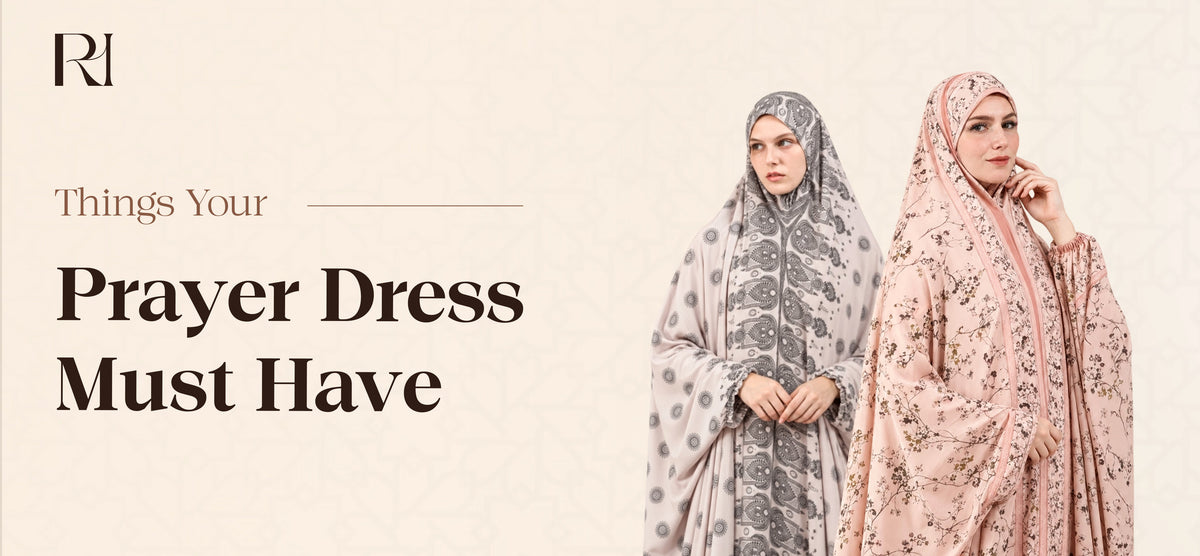
1. Full Coverage, From Head to Ankle
The baseline for a prayer dress is covering everything except the face and hands. That means a head covering that reaches the chest, sleeves that reach the wrists, and a hem that reaches the ankles or floor. Check the product details for sleeve length and hem length, and look at how the piece falls on the model rather than relying on the description alone. Rules can vary slightly between traditions, so if you follow a specific school, confirm the details with a scholar you trust.
2. Fabric That's Truly Opaque
A prayer dress should never need a second layer to feel secure. Hold the fabric up to a light or a window if you can, and be cautious with very light chiffon or loosely woven materials, which can become see-through in bright light or when stretched in sujood. Blended satin, crepe, and tightly woven linen blends are dependable choices. The Noor Bloom Blended Satin Prayer Gown is a good example of a satin blend with enough body to stay opaque.
3. A Loose Cut That Moves With You
Standing, bowing, prostrating, and sitting each pull on fabric differently. A prayer dress should be loose through the shoulders, chest, and hips so nothing tightens or outlines your shape when you move. If a dress feels fitted while you're standing still, it will feel tighter once you bend.
4. A Head Covering That Stays Put
An attached or built-in head covering saves you from pinning and repinning between prayers. Look for one with an opening that's wide enough to pull on easily but secure enough not to slide back when you lower your head. If the dress comes as a set with a separate khimar, like the Jannat Lightweight Silk Prayer Set, check that the pieces are cut to work together.
5. A Hem That Doesn't Ride Up
This is the check most people skip. When you go into sujood, a hem that's even slightly too short or too narrow can lift and expose your ankles. A fuller, longer hem solves this. If you're between lengths, choose the longer one, since extra length is easy to manage and missing length isn't.
6. Breathable, Comfortable Fabric
You'll wear a prayer dress for short, repeated sessions throughout the day, sometimes over other clothes. Fabric that traps heat becomes uncomfortable fast. Lightweight silk-touch fabrics and linen blends breathe better than heavier satin, while a slightly weightier fabric feels more comfortable in cooler rooms. Match the weight to the climate you pray in most.
7. Easy to Put On and Easy to Care For
The best prayer dress is the one you actually reach for. A pull-on design with no fiddly closures makes it quick to wear over any outfit. Easy care matters just as much: you'll wash it often, so check that the fabric holds its shape and color after repeated washing. A linen-blend style like the Radia Ruffles Linen Blend Prayer Set is a practical example of a set built for regular use.
Discover our latest collection - modest, refined, and made for you.
Shop Prayer Set →The 30-Second Try-On Test
Once your prayer dress arrives, run through this quick check before you wear it for real:
-
Raise your arms overhead. Do the sleeves stay near your wrists?
-
Bow forward to ruku position. Does the fabric stay put and keep you covered?
-
Kneel and lower to sujood. Does the hem stay down, and does the head covering stay in place?
-
Stand in bright light. Is anything visible through the fabric?
If it passes all four, it's ready for daily use. If it doesn't, you've found out before it mattered.
Frequently Asked Questions
A prayer gown is a full-coverage dress designed specifically for Muslim women to wear during salah (prayer). It typically features long sleeves, an integrated hijab or hood, and a floor-length hem that provides complete coverage in every prayer position. Prayer gowns are worn over your everyday clothes for quick and easy salah.
For salah, a woman must wear clothing that covers her entire body except her face and hands. The clothing should be loose-fitting, opaque (not see-through), and long enough to cover the feet during sujood. A dedicated prayer dress with an integrated hijab is the easiest way to meet all these requirements.
The terms "prayer gown" and "prayer dress" are generally used interchangeably. Both refer to full-coverage garments worn for salah. Some people use "gown" for more elegant or satin styles, and "dress" for simpler everyday versions, but there is no formal difference.
Yes, prayer gowns are specifically designed for daily salah. Many Muslim women keep a prayer gown near their prayer mat at home and another in their bag for on-the-go prayer. Lightweight cotton or jersey prayer dresses are ideal for everyday use.
It depends on your priorities. Satin is best for elegance and special occasions. Cotton is best for hot climates and everyday breathability. Jersey offers the most stretch and ease of movement. Medina silk (nidha) is best for travel because it resists wrinkles. Choose based on how and where you will pray most often.
Yes, satin is very comfortable for praying. It is lightweight, smooth, and drapes softly without clinging. Matte satin in particular stays in place well during sujood and does not overheat like heavier fabrics. Satin prayer gowns are especially popular for Eid and Ramadan taraweeh.