
Two-Piece Abaya | Everything You Need to Know
A two-piece abaya sits in an interesting spot in a modest wardrobe — more put-together than throwing on separates, but more flexible than a single-piece garment. If you've been debating whether it's the right addition to your closet, here's a clear look at what actually makes a two-piece abaya different, how to pick the right one, and where it fits alongside the abayas you probably already own.
What Is a Two-Piece Abaya, Exactly?
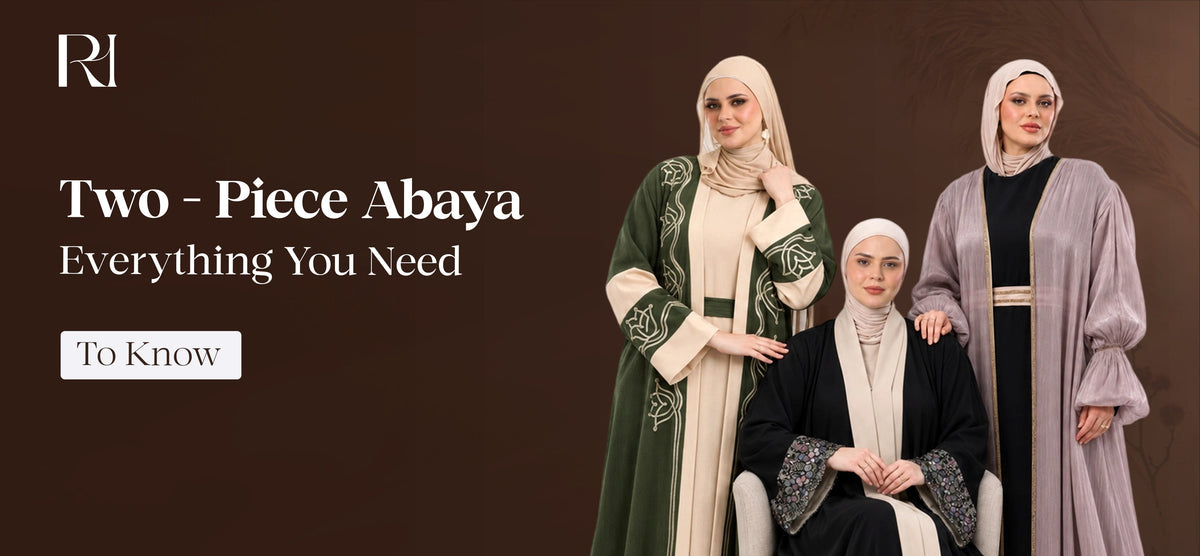
A two-piece abaya is a coordinated set — typically a flowing outer layer paired with a matching underdress or skirt — designed in the same fabric and color so the two pieces read as one complete outfit. Unlike buying separates and hoping they match, everything is pre-coordinated: same fabric weight, same tone, often the same detailing carried across both pieces. A style like the Yusra Flowy Lightweight Silk Abaya Set shows this well — the outer layer and underdress are cut from the same silk-touch fabric, so there's zero guesswork involved in putting it on.
Two-Piece Abaya vs. One-Piece Abaya
The core difference comes down to structure and flexibility:
-
A one-piece closed abaya is a single garment, worn like a dress — put it on and you're done, with the most effortless coverage of the three options.
-
An open abaya is a single layer too, but opens down the front, worn over an inner outfit for a more layered, styled look.
-
A two-piece abaya splits the outer layer and the underlayer into two separate, coordinated pieces — giving you the polish of a matched outfit with more flexibility than a one-piece garment offers.
If you're weighing a one-piece closed abaya or open abaya against a two-piece set, the deciding factor usually comes down to how much you value adjustability versus simplicity — which brings us to one of the biggest practical advantages of the two-piece format.
The Fit Advantage Most People Don't Think About
One thing a two-piece abaya does better than almost any one-piece style: it adjusts to your proportions, not just your size. Because the top and bottom are separate pieces, you can size them independently — useful if your torso and leg length don't fall into the same "regular" proportions that a one-piece garment assumes. A belted set like the Hind Lightweight Silk Two-Piece Abaya Set takes this further, with a defined waist that lets you cinch for shape or leave loose for a more relaxed silhouette, depending on the day.
This is also why two-piece sets tend to photograph and fit more consistently across different body types than a single long garment cut to one standard proportion.
Choosing the Right Fabric
-
Lightweight silk-touch fabric — soft drape, breathable, and elegant enough for both daily wear and dressier occasions.
-
Soft crepe with embroidery — a heavier, more structured option that holds embellishment beautifully. The Samira Embroidered Crepe Abaya Set is a good example of how crepe carries detail without looking overdone.
Discover our latest collection - modest, refined, and made for you.
Shop New Arrivals →Linen blends — the most breathable choice, ideal for warmer climates or all-day errands where comfort matters most.
Sheer organza — reserved for occasion wear, layered over a solid underdress for a more elevated, formal finish.
Occasion Guide
-
Everyday wear — a lightweight silk or linen set in a neutral tone gets you dressed in seconds without sacrificing polish.
-
Work — a crepe two-piece set in a darker, structured tone reads professional without needing much else added.
-
festival & special occasions — embroidered crepe or sheer organza sets bring the elevated finish these occasions call for, often without needing extra accessories to feel complete.
-
Travel — a lightweight silk set resists creasing better than a heavier one-piece abaya, making it easier to pack and wear straight out of a suitcase.
Caring for a Two-Piece Set
Because you're maintaining two coordinated pieces, a little extra care keeps them looking matched over time:
-
Wash both pieces together on the same cycle to keep color fading even across the set
-
Hang dry embroidered or organza pieces to protect detailing
-
Store the set together on one hanger so pieces don't get separated or mismatched with other items in your closet
Frequently Asked Questions
They're closely related. Both are loose, overhead garments designed for modest coverage, and in the context of salah, a prayer robe is essentially a jilbab-style piece purpose-built for prayer rather than everyday outerwear.
You can, but most prayer robes are cut specifically for ease of movement during prayer rather than as an everyday silhouette, so they tend to look more purely functional than a prayer dress does outside of prayer time.
Islamic guidelines call for a garment that covers the entire body except the face and hands, is loose-fitting and opaque, and stays in place through every movement of salah — whether that's achieved through a robe-style piece or a dress-style set comes down to personal preference.
Largely, yes — "pray dress" and "prayer gown" are often used to describe the same category of one-piece salah wear, though "prayer dress" more specifically implies a piece that could also be worn as standalone modest clothing.
Not necessarily, but many women find it helpful to own one of each — a robe for fast, practical daily salah, and a dress-style piece for when they want their prayer wardrobe to feel a little more intentional or occasion-worthy.