
Prayer Clothes for Women | The Complete Buying Guide
Choosing the right prayer clothes shouldn't feel complicated — but with so many styles, fabrics, and cuts available, it's easy to end up with a piece that doesn't quite fit your routine. Whether you're building your very first prayer wardrobe or replacing a gown that's seen better days, this guide walks you through everything worth knowing before you buy: the different types of prayer clothes available, which fabric actually holds up to five daily prayers, and how to match a piece to the way you actually live and worship.
What Counts as "Prayer Clothes" for Women?
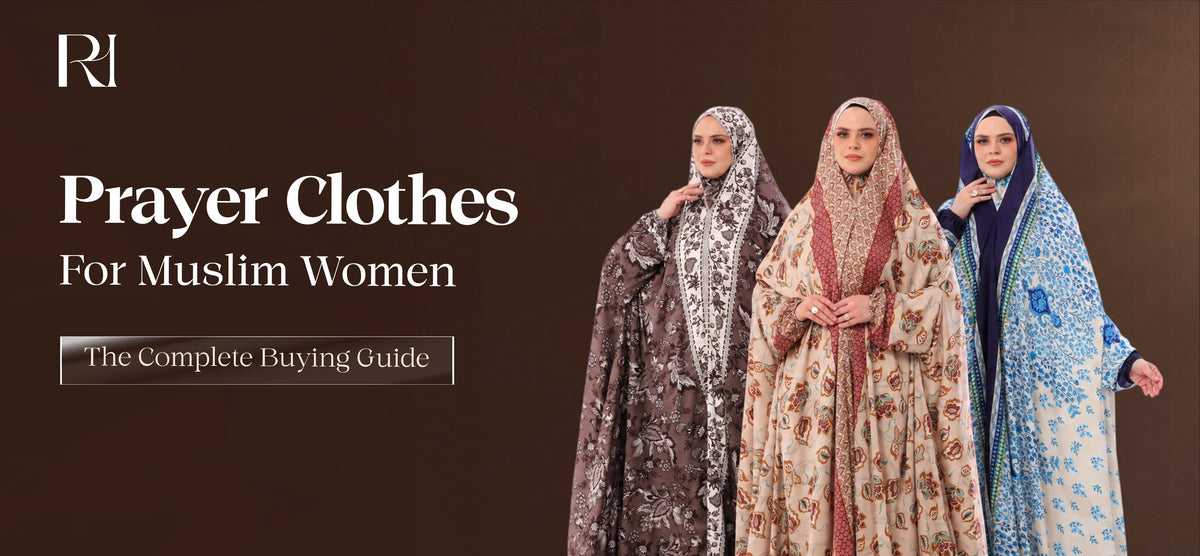
Prayer clothes cover a specific category of modest wear designed with one job: full coverage during prayer, without a second thought. Unlike everyday abayas or dresses, they're built to go on quickly, move freely through every rakah, and require zero adjusting between standing and sujood. This can mean an one-piece gown, a two-piece head-covering-and-skirt set, or a lightweight overhead layer worn on top of regular clothing. If you're comparing pieces, our full Prayer Gowns collection is a good place to see the range side by side before deciding what fits your routine.
Types of Prayer Clothes to Choose From
Not every prayer wardrobe needs to look the same, and most women end up mixing a few types depending on the occasion:
-
One-piece prayer gowns — the simplest option. Slip it on over your head and you're covered instantly, with no separate pieces to coordinate. A style like the Noor Bloom Blended Satin Prayer Gown is a good example of this: attached head covering, full-length cut, and one motion to get dressed.
-
Two-piece prayer sets — a head-covering top paired with a matching skirt. These tend to feel a little more put-together and are easier to wash and replace piece by piece. The Jannat Lightweight Silk Prayer Set is a lightweight take on this style, ideal for warmer climates or layering.
-
Pilgrimage sets — simpler, unpatterned pieces designed specifically for the requirements of pilgrimage. If you're preparing for a pilgrimage rather than daily prayers, this is a distinct category worth shopping separately from your everyday prayer wardrobe.
How to Choose Prayer Clothes for Your Lifestyle
The "best" prayer clothes really depend on how and where you're praying most often:
-
Praying at home, five times a day — prioritize comfort and ease over anything else. A soft, breathable one-piece gown you can leave by your prayer mat means one less decision in your day.
-
Praying on the go or at work — look for lightweight, wrinkle-resistant fabrics that fold small enough to keep in a bag or car. A linen-blend set like the Radia Ruffles Linen Blend Prayer Set travels well without creasing.
-
Long evenings out — comfort over hours of standing matters more here than anywhere else. Breathable, non-clingy fabric with a relaxed fit will serve you far better than anything fitted or heavy.
-
Pilgrimage — check the pilgrimage-specific requirements rather than relying on a regular prayer gown, since they differ from everyday prayer wear.
Discover our latest collection - modest, refined, and made for you.
Shop New Arrivals →Best Fabrics for Prayer Clothes
Fabric is where most of the comfort (or discomfort) comes from, so it's worth paying attention to:
-
Blended satin — soft, smooth, and drapes beautifully, though it's best for indoor, climate-controlled prayer rather than hot outdoor conditions.
-
Lightweight silk-feel fabric — breathable and gentle on the skin, a strong choice if you pray for extended periods or in warmer weather.
-
Linen blends — naturally breathable and less prone to clinging, well suited to travel since they resist deep creasing.
Whichever fabric you choose, opaque, non-clingy material is non-negotiable for prayer clothes — sheerness or clinging fabric defeats the purpose of a piece built for coverage.
Styling Your Prayer Clothes Set
A prayer clothes set doesn't need much styling, but a few small additions make the routine smoother. Pairing your gown or set with a soft, padded prayer mat adds comfort during longer prostrations, especially if you pray on hard flooring. If you prefer a separate hijab rather than an attached head covering, a lightweight chiffon or modal option layers easily under most prayer gowns without adding bulk.
Caring for Your Prayer Clothes So They Last
Because prayer clothes get worn daily — sometimes multiple times a day — a little care goes a long way:
-
Wash in cool water and avoid high heat when drying, especially with satin and silk-feel fabrics, to protect the drape.
-
Skip fabric softener on linen blends, since it can reduce their natural breathability over time.
-
Rotate between two or three pieces rather than relying on just one gown, so no single piece wears out too quickly.
Frequently Asked Questions
They're closely related. Both are loose, overhead garments designed for modest coverage, and in the context of salah, a prayer robe is essentially a jilbab-style piece purpose-built for prayer rather than everyday outerwear.
You can, but most prayer robes are cut specifically for ease of movement during prayer rather than as an everyday silhouette, so they tend to look more purely functional than a prayer dress does outside of prayer time.
Islamic guidelines call for a garment that covers the entire body except the face and hands, is loose-fitting and opaque, and stays in place through every movement of salah — whether that's achieved through a robe-style piece or a dress-style set comes down to personal preference.
Largely, yes — "pray dress" and "prayer gown" are often used to describe the same category of one-piece salah wear, though "prayer dress" more specifically implies a piece that could also be worn as standalone modest clothing.
Not necessarily, but many women find it helpful to own one of each — a robe for fast, practical daily salah, and a dress-style piece for when they want their prayer wardrobe to feel a little more intentional or occasion-worthy.