
Prayer Robe vs Prayer Dress | What's the Difference & Which to Choose?
Shopping for prayer clothes often means running into two terms that sound like they mean the same thing: prayer robe and prayer dress. They're related, but they're not identical, and picking the wrong one for your routine is one of the most common reasons a prayer piece ends up sitting unused in a drawer. Here's a clear breakdown of how they differ, and which one is likely to serve you better.
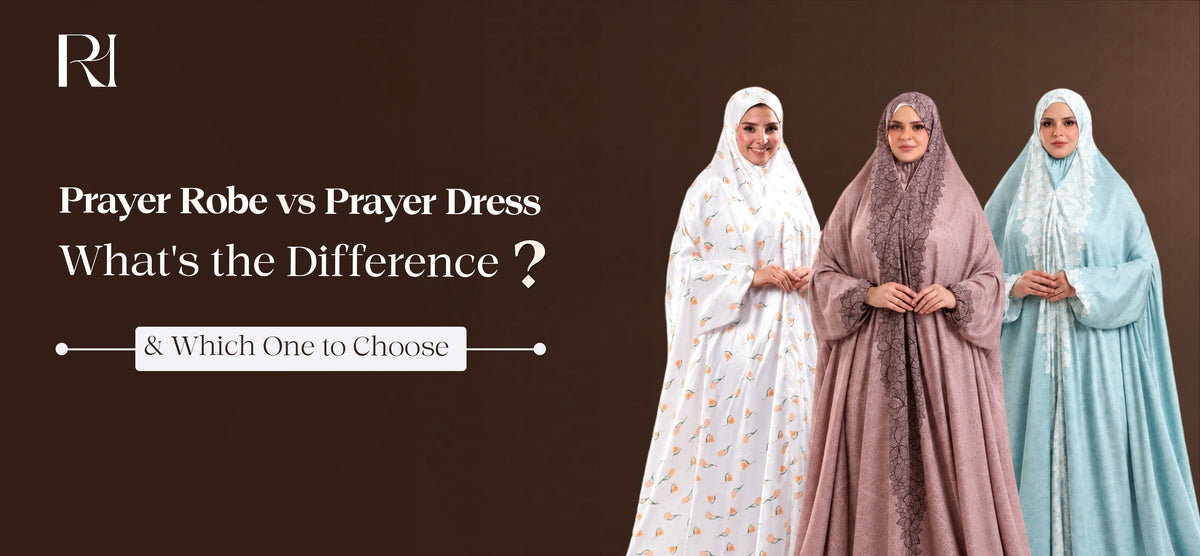
Prayer Robe vs Prayer Dress: Side by Side
|
Prayer Robe |
Prayer Dress |
|
|
Worn as |
Overlayer, on top of your existing clothes |
Can double as a standalone outfit |
|
Structure |
Loose, overhead, one continuous piece |
Often has more defined shape or a top-and-skirt split |
|
Best for |
Fastest transition into prayer |
Praying at home in comfort, or wearing beyond prayer time |
|
Coverage style |
Attached head covering or hood, full sweep to the floor |
May pair with a separate hijab depending on the style Discover our latest collection - modest, refined, and made for you. Shop New Arrivals → |
|
Typical use case |
Quick prayers between errands, work, or travel |
Daily prayer at home, or dual-purpose modest wear |
What Makes Something a "Prayer Robe"?
A prayer robe is built around one idea: getting you covered in seconds, over whatever you're already wearing. It's typically an one-piece, overhead garment with an attached head covering that flows into a full-length skirt, so there's no separate top or bottom to coordinate. A style like the Noor Bloom Blended Satin Prayer Gown is a good example of the robe format — pull it on, and you're instantly ready to pray without adjusting anything underneath.
This makes a prayer robe the better fit if your day involves praying between errands, at work, or anywhere you don't have time to change clothes properly.
What Makes Something a "Prayer Dress"?
A prayer dress leans closer to a standalone garment. It may still cover everything a robe does, but the cut is often a little more defined, and many women choose one specifically because it can be worn before or after prayer too — not just during it. A two-piece option like the Jannat Lightweight Silk Prayer Set fits this category well, since the head-covering top and skirt can be worn together for prayer or the top styled separately afterward.
If you're praying mainly at home and want a piece that feels a little more like "an outfit" rather than purely functional prayer gear, a prayer dress is usually the better match.
Which One Should You Choose?
A few quick scenarios make this easier to decide:
-
You pray five times a day and value speed above everything → a prayer robe, so you can put it on without thinking.
-
You want one piece that works for prayer and for lounging at home → a prayer dress with a more defined silhouette.
-
You travel often and need something that packs small → a lightweight robe-style piece, like the Radia Ruffles Linen Blend Prayer Set, which resists creasing in a suitcase.
-
You're building your very first prayer wardrobe → start with a robe for daily use, then add a dress-style piece if you want more versatility later.
Many women end up owning both — a robe for quick, practical prayer, and a dress-style set for slower, more intentional prayer time at home. You can browse both formats together in the Prayer Gowns collection to see how the two styles compare in person.
Frequently Asked Questions
They're closely related. Both are loose, overhead garments designed for modest coverage, and in the context of salah, a prayer robe is essentially a jilbab-style piece purpose-built for prayer rather than everyday outerwear.
You can, but most prayer robes are cut specifically for ease of movement during prayer rather than as an everyday silhouette, so they tend to look more purely functional than a prayer dress does outside of prayer time.
Islamic guidelines call for a garment that covers the entire body except the face and hands, is loose-fitting and opaque, and stays in place through every movement of salah — whether that's achieved through a robe-style piece or a dress-style set comes down to personal preference.
Largely, yes — "pray dress" and "prayer gown" are often used to describe the same category of one-piece salah wear, though "prayer dress" more specifically implies a piece that could also be worn as standalone modest clothing.
Not necessarily, but many women find it helpful to own one of each — a robe for fast, practical daily salah, and a dress-style piece for when they want their prayer wardrobe to feel a little more intentional or occasion-worthy.